
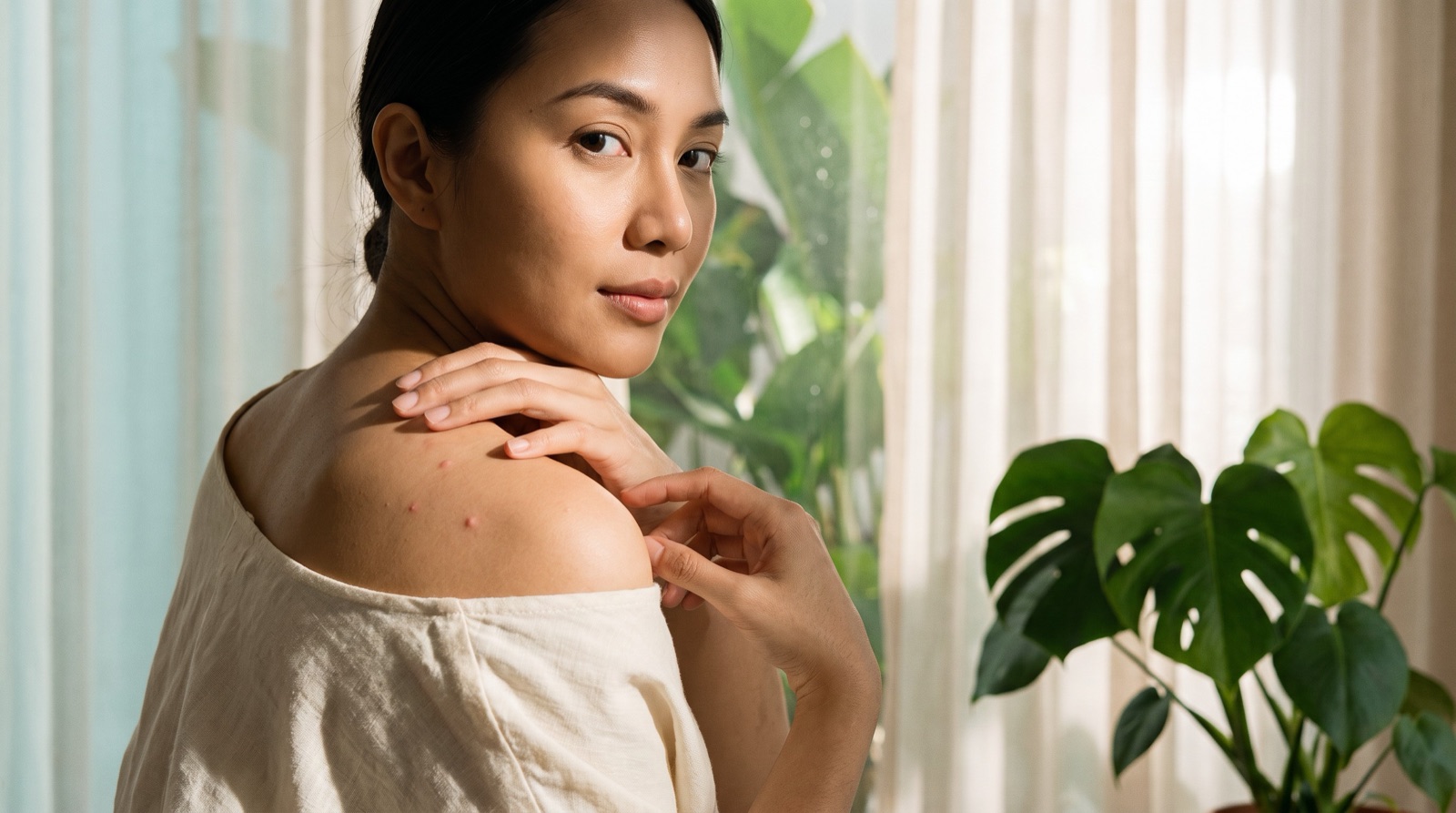
Tiny, itchy bumps on your chest, back or forehead that just won't budge, no matter how many acne products you throw at them? You might be treating the wrong thing. "Fungal acne" isn't actually acne. It's Malassezia folliculitis, where a yeast that normally lives harmlessly on your skin gets involved in inflamed hair follicles. Because the cause is different, so is the fix.
What is fungal acne?
Malassezia is a yeast that lives on most people's skin without causing any trouble. Sometimes, though, it's involved in inflammation inside the hair follicles. The result is small red bumps, sometimes with tiny pus spots, that look a lot like a breakout.
Regular acne works differently. It starts with pores blocked by oil and dead skin, which is where blackheads and whiteheads come from, and then bacteria and inflammation join in. Same neighbourhood, different culprit.
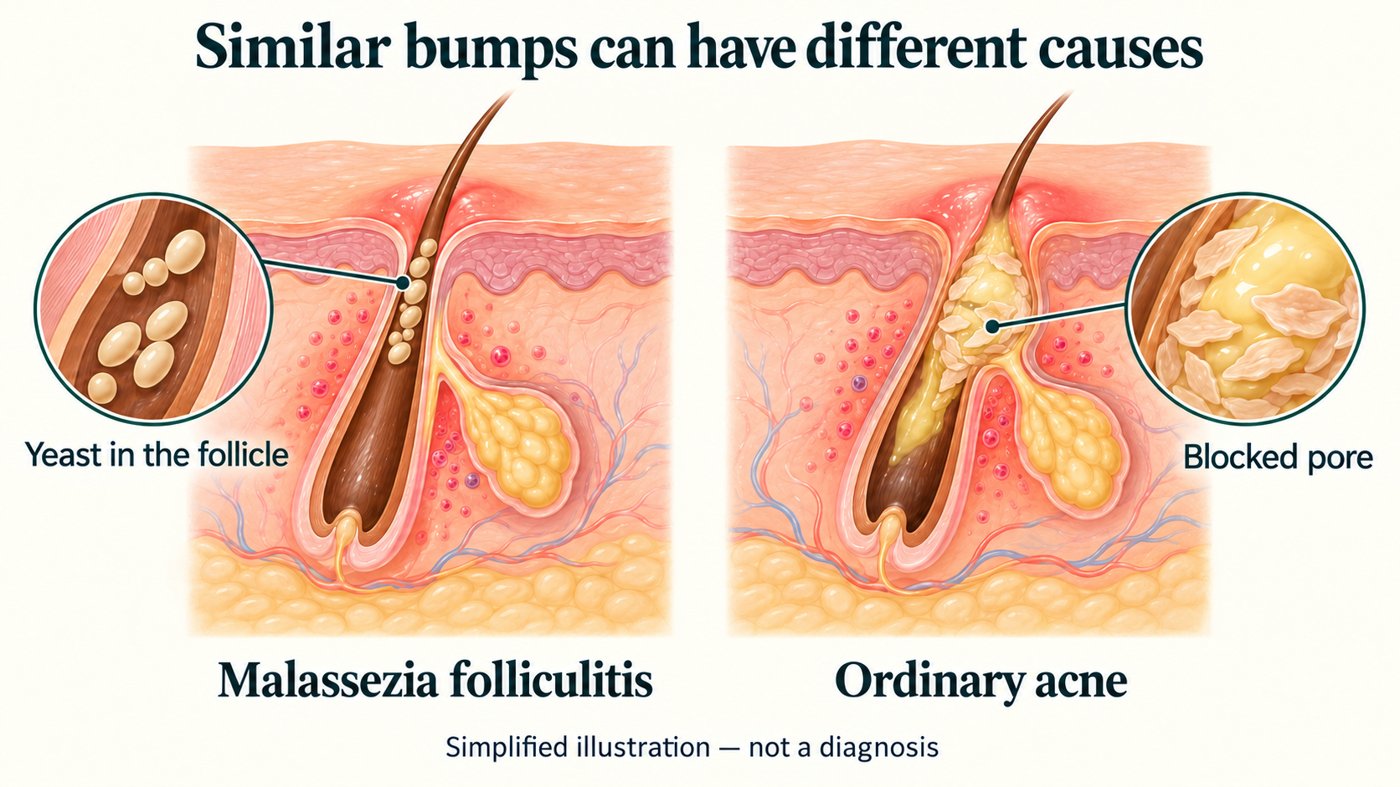
Fungal acne vs regular acne at a glance
| Fungal acne | Regular acne | |
|---|---|---|
| What the bumps look like | Small, similar in size, often clustered | A mix of blackheads, whiteheads, red spots and sometimes deeper lumps |
| Blackheads and whiteheads | Not usually part of it | Common |
| Itch | Often noticeable | Not usually the main symptom |
| Where it shows up | Often upper back and chest, sometimes forehead | Face, chest and back |
| What's behind it | Yeast-related inflammation in the follicles | Blocked pores, oil, bacteria and inflammation |
What the bumps look like
- Fungal acne
- Small, similar in size, often clustered
- Regular acne
- A mix of blackheads, whiteheads, red spots and sometimes deeper lumps
Blackheads and whiteheads
- Fungal acne
- Not usually part of it
- Regular acne
- Common
Itch
- Fungal acne
- Often noticeable
- Regular acne
- Not usually the main symptom
Where it shows up
- Fungal acne
- Often upper back and chest, sometimes forehead
- Regular acne
- Face, chest and back
What's behind it
- Fungal acne
- Yeast-related inflammation in the follicles
- Regular acne
- Blocked pores, oil, bacteria and inflammation
One twist: the two can show up together, even in the same area. So spotting a few blackheads doesn't rule fungal acne out.
Why your acne products might not be working
Most acne products are built to unclog pores and calm acne inflammation. If yeast is behind your bumps, they're aiming at the wrong target, which is why many people with fungal acne feel like they've tried everything.
That's also why it's worth getting checked before switching to antifungal products on a hunch. Your doctor can tell you which one you're dealing with, or whether it's both, so you're not swapping one guess for another.
How is fungal acne treated?
Fungal acne is usually treated with an antifungal applied to the skin, and in some cases one taken by mouth. Tablets aren't right for everyone, so your doctor will check your health and any medicines you're taking before recommending them.
If regular acne is also in the mix, it may need its own treatment alongside. At Reborn, our doctors assess your breakout first, then put together a plan that covers what your skin actually needs. You can read more about how we approach acne.
Everyday habits that help
Fungal acne loves heat, sweat and anything that traps moisture against your skin, so a few small changes can make a difference alongside treatment:
- Change out of sweaty clothes soon after exercise
- Choose looser clothing over areas that flare
- Swap heavy, greasy products for lighter ones on skin that keeps breaking out
In Singapore's humidity, these habits are worth keeping even after your skin settles.
Frequently asked questions
Is fungal acne actually acne?
No. It's folliculitis, which means inflamed hair follicles. It gets the "acne" name because it looks like a breakout, not because it's related to regular acne.
Can I tell which one I have from a photo?
Not reliably. The two can look very similar, which is why your doctor looks at the full picture, including how your skin has responded to what you've tried.
Will fungal acne come back?
It can, especially in hot, humid weather. The aim of treatment is to settle the flare, not to remove the yeast that naturally lives on your skin. If it keeps returning, your doctor can look at what's triggering it.
Can I use regular acne products on fungal acne?
They're unlikely to help much, since they target a different cause. Get your bumps checked first so your treatment is aimed at the right thing.
Itchy bumps that won't settle?
Book a consultation at Reborn Skin Clinic. Our licensed doctors will look at what's really behind your breakout and put together a treatment plan that targets it.