
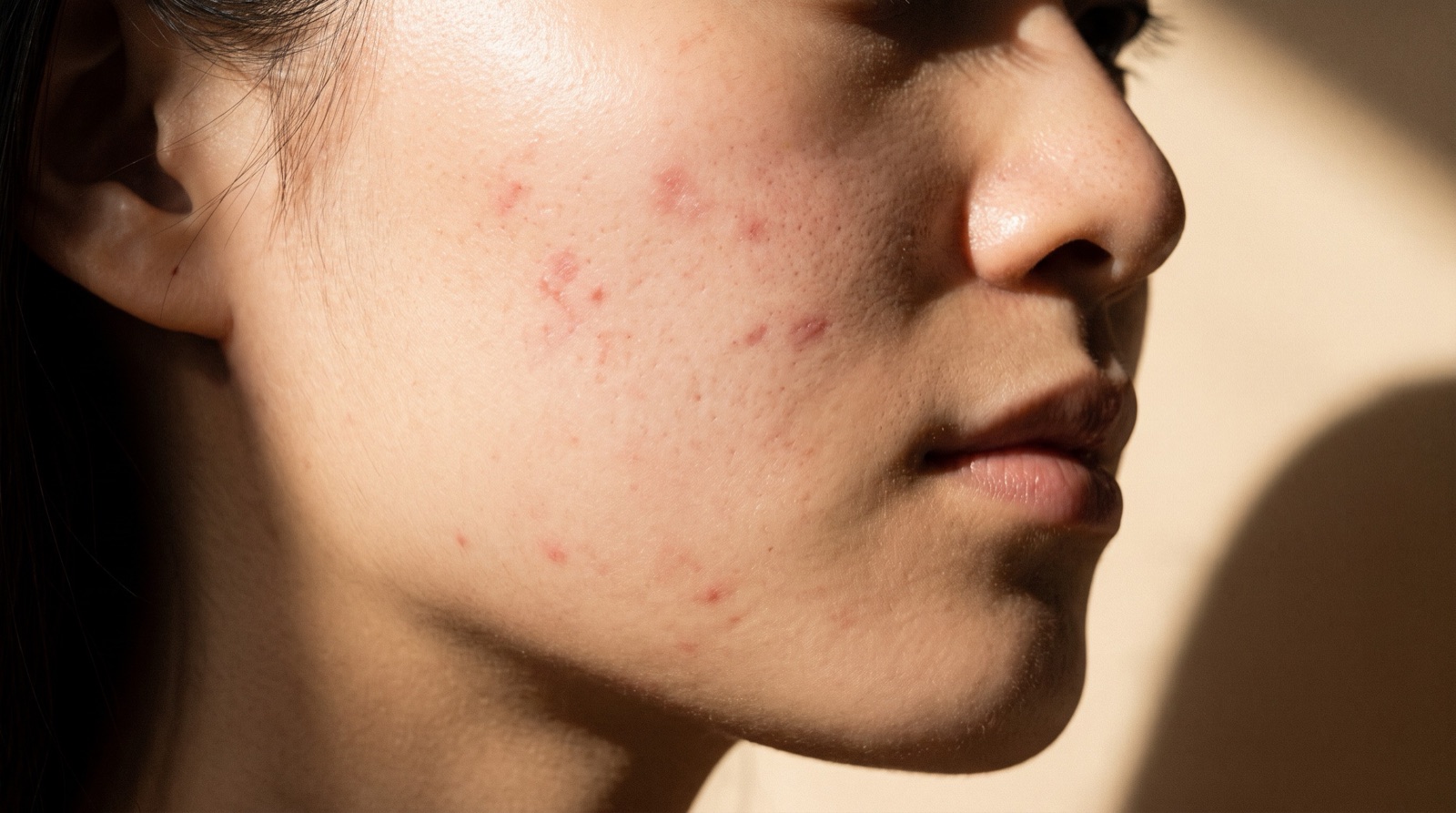
The spot is long gone, but the pink or red mark it left behind is still hanging around? That's post-inflammatory erythema, or PIE, and it's one of the most common leftovers from a breakout. Here's the reassuring part: PIE is a colour change, not a scar. Some marks fade on their own, and the right care can help the rest along.
What is post-inflammatory erythema (PIE)?
"Erythema" simply means redness. After an acne spot settles, the tiny blood vessels in that area can stay widened for a while, leaving a flat pink, red or purplish mark. You might even see a few fine vessels up close.
PIE is different from the brown marks some people get after acne (that's post-inflammatory hyperpigmentation) and from dents or pits, which are true scars. You can have more than one at the same time. Our guide to types of acne scars walks through the differences.
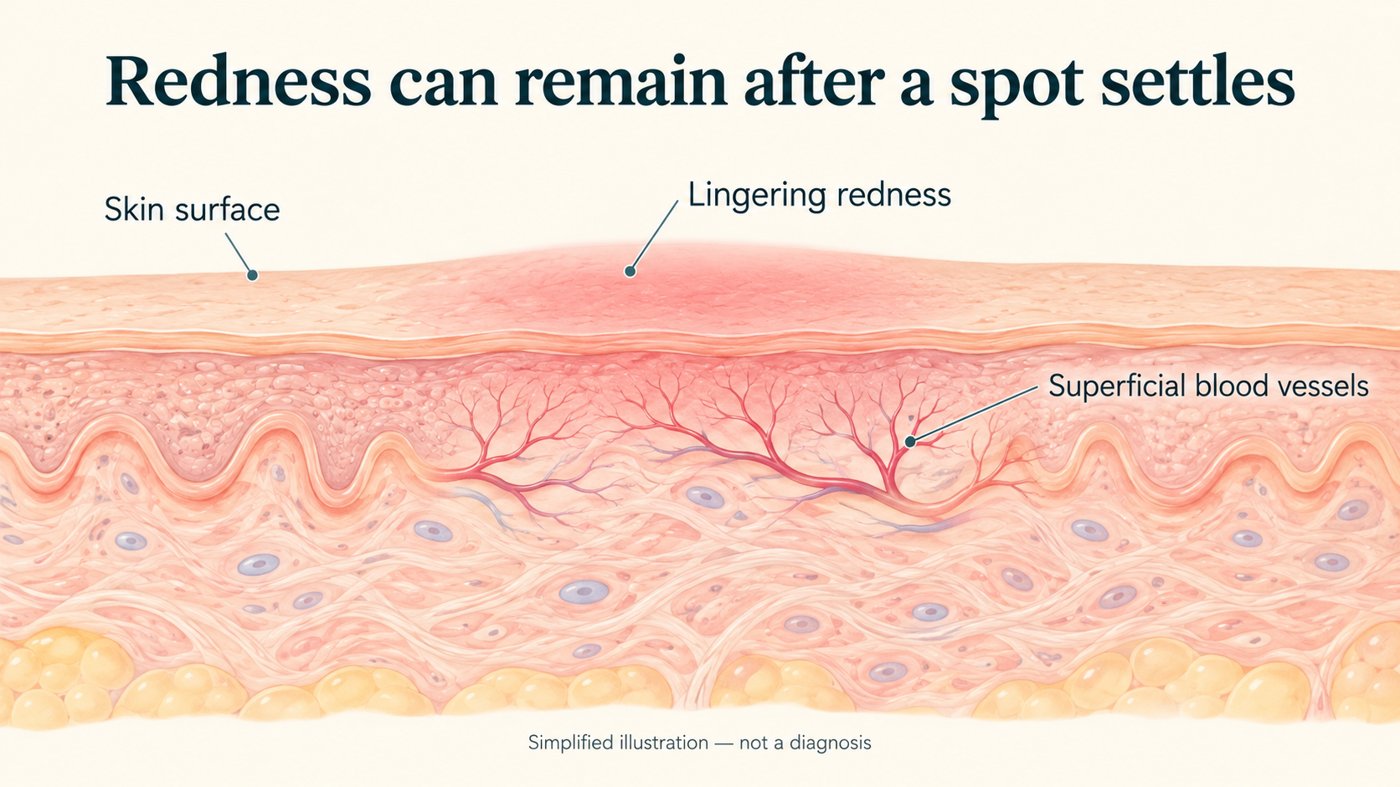
Why do red acne marks last so long?
There's no set timeline for a mark to fade. Some go in a few weeks, others stick around for months. A couple of things can keep them looking red for longer:
- New breakouts in the same spot, which keep adding fresh marks
- Irritation from skincare, especially scrubbing or layering lots of acids to "fade" the marks faster
It's tempting to attack red marks with stronger products, but trying harder often leaves the skin more irritated and redder. Gentle usually wins here.
What helps red marks fade?
Start with the basics:
- Use a gentle cleanser and skip harsh scrubs
- Wear sunscreen daily, since sun exposure can keep marks looking darker for longer
- Keep active acne under control, so new marks aren't added on top of old ones
For marks that are taking their time, in-clinic treatment can help. Light and laser-based treatments are used to target the redness and even out skin tone after breakouts. At Reborn, our Luminance Glow Laser is one option your doctor may suggest to help calm redness and uneven tone after acne. Your doctor will look at your skin type and what's still active before recommending what fits.
Is it PIE, or something else?
Not every red patch after a breakout is PIE. If your skin stings or burns, or the redness spreads beyond where the old spots were, irritation or another skin condition could be involved. Your doctor can tell the difference and point you in the right direction.
When you come in, it helps to bring the names of products you've been using, including any acids, exfoliants or recent peels.
When should you see a doctor?
If your marks are slowly fading and your skin feels comfortable, giving it time is reasonable. It's worth booking a review if:
- The redness isn't fading, or is getting worse
- It's spreading beyond your old spots
- It comes with stinging, burning or itching
- You're still getting new breakouts
- The marks simply bother you
Frequently asked questions
Is PIE a scar?
No. PIE is a change in colour, not texture. It isn't a dent or a raised bump, though some people have both PIE and textural scars at the same time.
Will red acne marks go away on their own?
Many do fade over time, but there's no fixed timeline. Gentle skincare, sun protection and keeping breakouts under control all help. In-clinic treatment is an option for marks that linger.
What's the difference between red marks and brown marks after acne?
Red or pink marks (PIE) come from widened blood vessels. Brown marks (PIH) come from extra pigment. They're treated differently, which is why it helps to have your doctor take a look.
Can I treat red marks while I still have acne?
Yes, but active acne usually needs attention too. Otherwise new marks keep appearing as old ones fade.
Red marks that won't fade?
Book a consultation at Reborn Skin Clinic. Our licensed doctors will look at what's behind the redness and walk you through the options that suit your skin.