
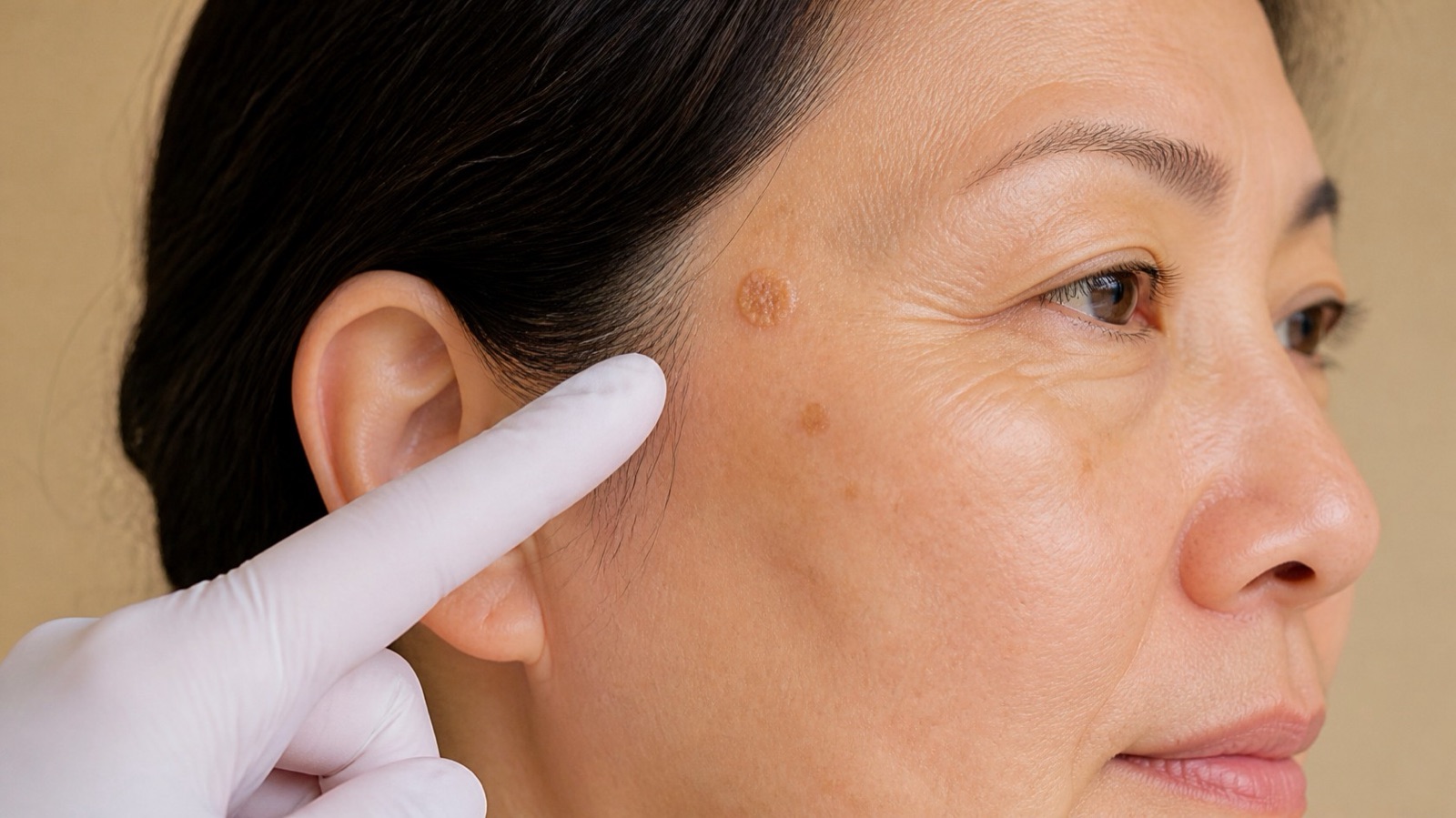
Noticed a rough, brown patch that seems to have appeared out of nowhere? Many people assume it's an age spot, but it could be a seborrhoeic keratosis, one of the most common skin growths as we get older. Both are usually harmless, and both can be removed if they bother you. The trick is knowing which one you've got, because that decides how it's treated.
What is a seborrhoeic keratosis?
A seborrhoeic keratosis (also spelt seborrheic keratosis, or SK for short) is a non-cancerous skin growth. It can look rough, scaly or waxy, and often has a "stuck-on" appearance, almost as if it could be lifted off the skin. SKs range from light tan to dark brown, and from flat to raised.
They tend to appear from middle age onwards and often run in families. Skincare and facials won't shift them, which is usually when people start asking about removal.
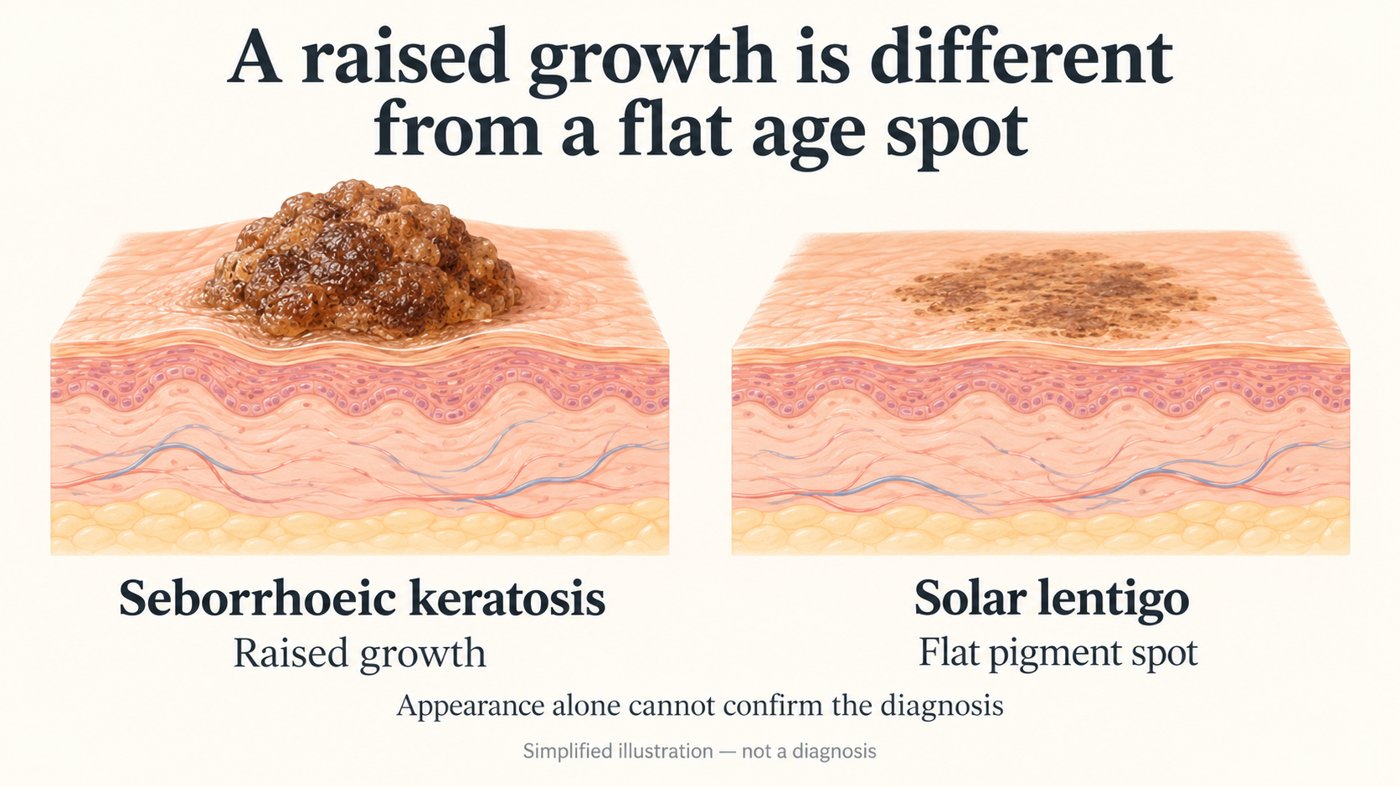
How is it different from an age spot?
An "age spot" usually means a solar lentigo, a flat brown mark caused by years of sun exposure. It's a pigment change in the skin, while an SK is a growth that sits on top of it.
| Seborrhoeic keratosis | Age spot (solar lentigo) | |
|---|---|---|
| What it is | A harmless skin growth | A flat pigment mark from sun exposure |
| How it looks | Often rough, scaly or waxy, with a stuck-on look | Usually flat and smooth, on sun-exposed skin |
| How it's treated | Removed as a growth | Treated as pigmentation, often with laser |
What it is
- Seborrhoeic keratosis
- A harmless skin growth
- Age spot (solar lentigo)
- A flat pigment mark from sun exposure
How it looks
- Seborrhoeic keratosis
- Often rough, scaly or waxy, with a stuck-on look
- Age spot (solar lentigo)
- Usually flat and smooth, on sun-exposed skin
How it's treated
- Seborrhoeic keratosis
- Removed as a growth
- Age spot (solar lentigo)
- Treated as pigmentation, often with laser
The two can overlap, though. Some SKs are flat, and some age spots feel slightly raised, so texture alone isn't always a reliable guide.
Why get it checked before removal?
Most rough brown patches are harmless. But a few other things, including moles and some skin cancers, can look similar. A quick check with your doctor confirms what it is before anything is removed, and makes sure it's treated with the right method.
Have a spot looked at sooner rather than later if it changes in size, shape or colour, grows quickly, bleeds, becomes sore or doesn't heal.
What happens at your appointment
Your doctor will ask when the spot appeared and whether it has changed, then examine it closely. In most cases, that's enough to confirm an SK or an age spot. If anything looks unusual, your doctor may suggest a small tissue sample (a biopsy) to be sure before going ahead.
How is seborrhoeic keratosis removed?
Once your doctor has confirmed it's an SK, removal is entirely your choice. Some people leave theirs alone, while others remove them because they catch on clothing, get irritated or simply bother them.
Common methods include laser removal, freezing, gentle scraping and excision for larger growths. Your doctor will recommend the approach that suits the size and location of your SK. Afterwards, the area usually heals over a few days to a couple of weeks, and may look slightly pink, lighter or darker before settling. Your doctor will explain the possible changes in skin colour before treatment. Removing one SK won't stop new ones appearing elsewhere over time.
Whatever you do, don't try to cut, freeze or burn a growth off at home. It can injure your skin and make it harder for your doctor to assess.
At Reborn, our doctors assess and remove common skin growths, including seborrhoeic keratoses, using laser removal or excision depending on the growth. If your spot turns out to be an age spot, see how we treat pigmentation. You can also read more about skin growths we treat.
Frequently asked questions
Is seborrhoeic keratosis dangerous?
No. A confirmed SK is non-cancerous. It's still worth having new or changing spots checked, since a few other growths can look similar.
Can a seborrhoeic keratosis look like a mole?
Yes, which is one reason your doctor will take a look before removal.
Will seborrhoeic keratosis come back after removal?
Removing an SK doesn't stop new ones from developing elsewhere over time. If a treated spot reappears or changes, have it checked again.
Can I remove an age spot the same way?
Age spots are pigmentation, so they're usually treated with pigment lasers instead. Your doctor will recommend the right option once they know which one you have.
A rough brown patch you'd like gone?
Book a consultation at Reborn Skin Clinic. Our licensed doctors will check what it is and talk you through your removal options.