
When your skin stings at the touch of a plain moisturiser, the natural reaction is to reach for something stronger: a "repair" serum, a new cream, maybe a facial. But a stinging, unhappy barrier usually needs less, not more. The real first step is to calm things down and find out what set it off. Once you know that, repairing your barrier gets a lot more straightforward.
What does your skin barrier do?
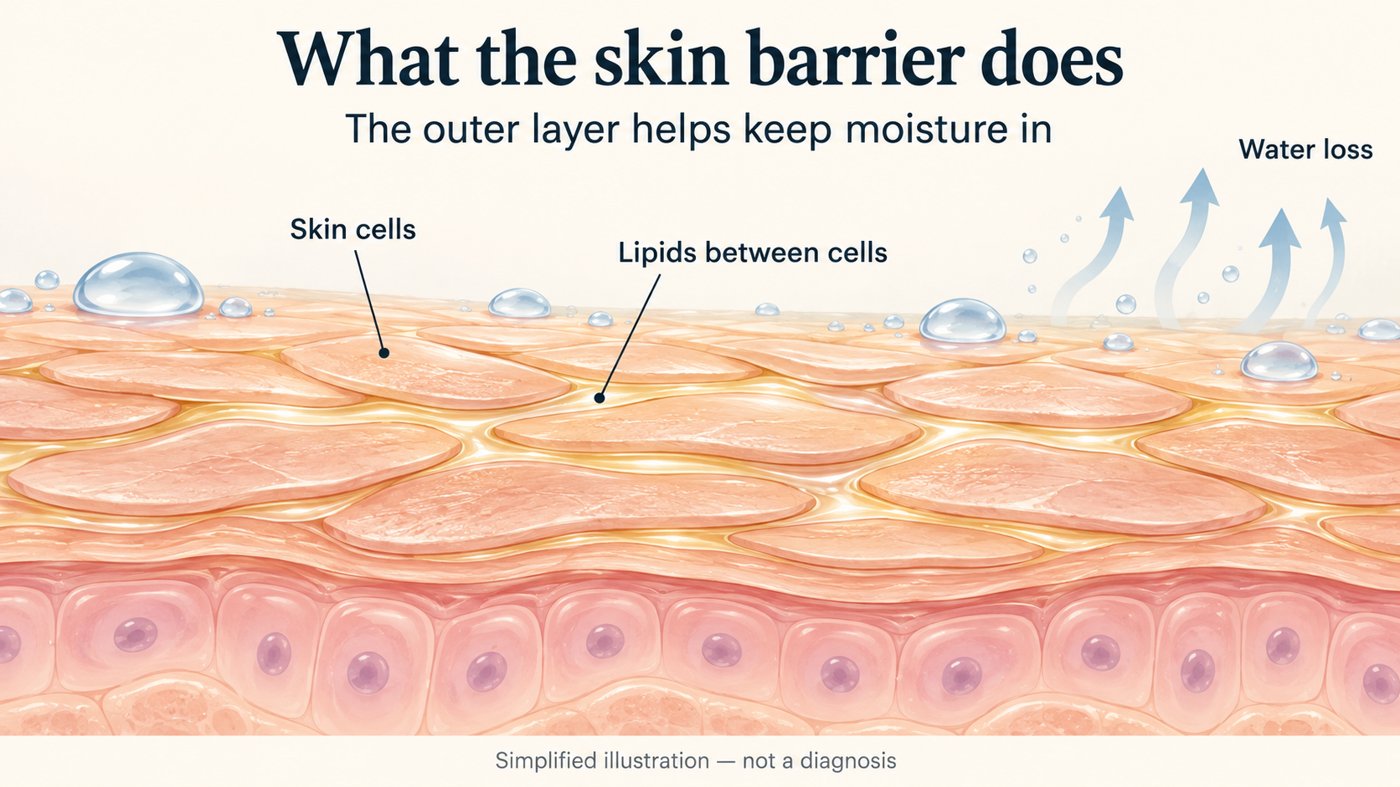
Your skin barrier is the outermost layer of your skin. Picture a brick wall: your skin cells are the bricks, and natural fats called lipids are the mortar holding them together.
When that wall is intact, it keeps moisture in and irritants out. When it's disrupted, water escapes more easily and everyday products can slip in and sting. That's why a weakened barrier often feels dry, tight and reactive all at once.
Why does your skin sting?
A disrupted barrier is one common reason, but it isn't the only one. Stinging can also come from a reaction to a specific ingredient, or from an underlying skin condition such as eczema or rosacea. These can feel very similar, which is why figuring out the cause matters before you start "repairing".
The usual suspects behind a stressed barrier are over-exfoliating, layering too many active ingredients like retinoids and acids, harsh cleansers, and environmental triggers like heat, sweat or air-conditioning.
What to do first
Think of this as giving your skin a break:
- Pause anything new. Stop the latest product or active you added. If it's a prescribed product, check with your doctor first.
- Go gentle. Use a mild cleanser and a fragrance-free moisturiser your skin tolerates.
- Hold off on actives. Skip exfoliants, retinoids and strong acids until your skin settles.
Quick tip: "unscented" and "fragrance-free" aren't the same thing. Unscented products can contain ingredients that mask fragrance, which can still bother sensitive skin. Our simple skincare routine guide covers the basics.
What to tell your doctor
A few details help your doctor get to the cause quickly. Bring product names or packaging along, including anything you've already stopped.
| Question | What to note |
|---|---|
| What changed recently? | New skincare, actives or treatments |
| Does everything sting, or just some products? | Which products hurt and which you still tolerate |
| Is it getting better or worse? | Whether it's settling after stopping a suspected trigger |
| What else do you notice? | Itch, redness, flaking, swelling or rash |
What changed recently?
- What to note
- New skincare, actives or treatments
Does everything sting, or just some products?
- What to note
- Which products hurt and which you still tolerate
Is it getting better or worse?
- What to note
- Whether it's settling after stopping a suspected trigger
What else do you notice?
- What to note
- Itch, redness, flaking, swelling or rash
If the trigger isn't obvious, your doctor may suggest patch testing to check for a contact allergy.
Where do skin barrier treatments fit in?
Once your doctor has worked out what's going on, in-clinic treatment can help your skin rebuild. Skin boosters deliver hydrating and repairing ingredients directly into the skin, where moisturisers can't reach. At Reborn, our Baby Skin Booster Cocktail combines polynucleotides with hydrating ingredients to improve moisture levels, calm inflammation and support barrier repair.
If an underlying condition is involved, your doctor will treat that alongside, since hydration on its own won't solve it. Read more about how we help dry and damaged skin and sensitive skin.
When to get your skin checked
Book a review if your moisturiser keeps stinging, your dryness isn't improving with gentle care, or you can't pin down the trigger. There's no need to keep testing products on reactive skin to figure it out yourself.
Get checked promptly if you have a spreading rash, blisters, marked swelling or symptoms that keep getting worse.
Frequently asked questions
How long does skin barrier repair take?
It depends on what caused the damage and whether that's been addressed. Many people notice their skin feeling calmer within a couple of weeks of simplifying their routine. If it's not improving, it's time to have it checked.
Do I need a ceramide moisturiser?
Not necessarily. Any gentle, fragrance-free moisturiser your skin tolerates is a good start. A ceramide label alone doesn't guarantee the whole formula will suit you.
Can a facial fix a damaged skin barrier?
Not on its own, and some facials can irritate reactive skin further. It's best to find the cause first, then choose treatments that support repair.
Are skin boosters safe for sensitive skin?
When performed by trained doctors with suitable formulations, yes. Your doctor will take your sensitivity into account when recommending one.
Skin that stings at everything?
Book a consultation at Reborn Skin Clinic and bring your product list along. Our licensed doctors will find out what's behind the sensitivity and help you choose the right first step.